Guess & Roll
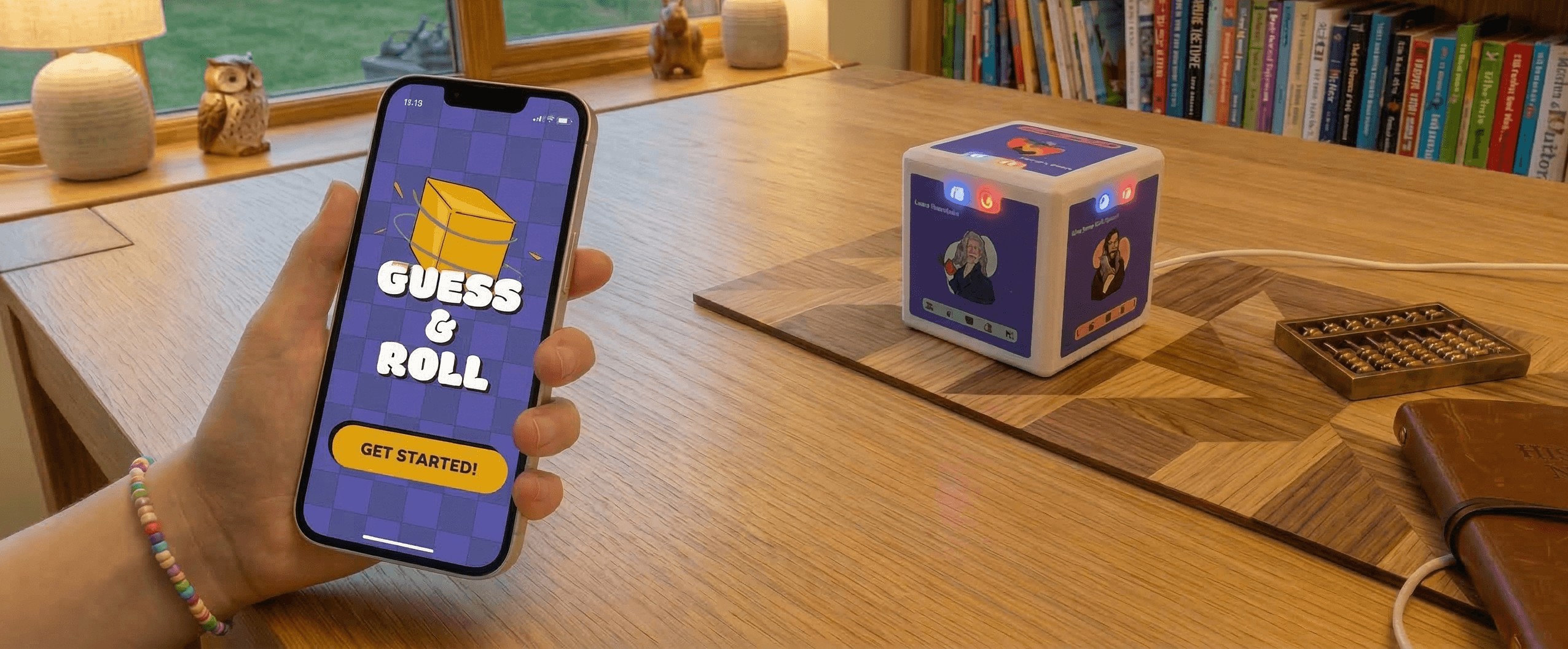
Guess & Roll is a hybrid play experience that combines physical interaction with digital feedback to create an interactive guessing game. It explores how tangible interfaces and responsive systems can enhance engagement through hands-on gameplay.
CONTEXT:
COURSE PROJECT @POLIMI
TOOLS:
FIGMA, PROTOPIE, ARDUINO, 3D PRINT
DURATION:
12 WEEKS
TEAM:
DENIZ KUCUK
overview.
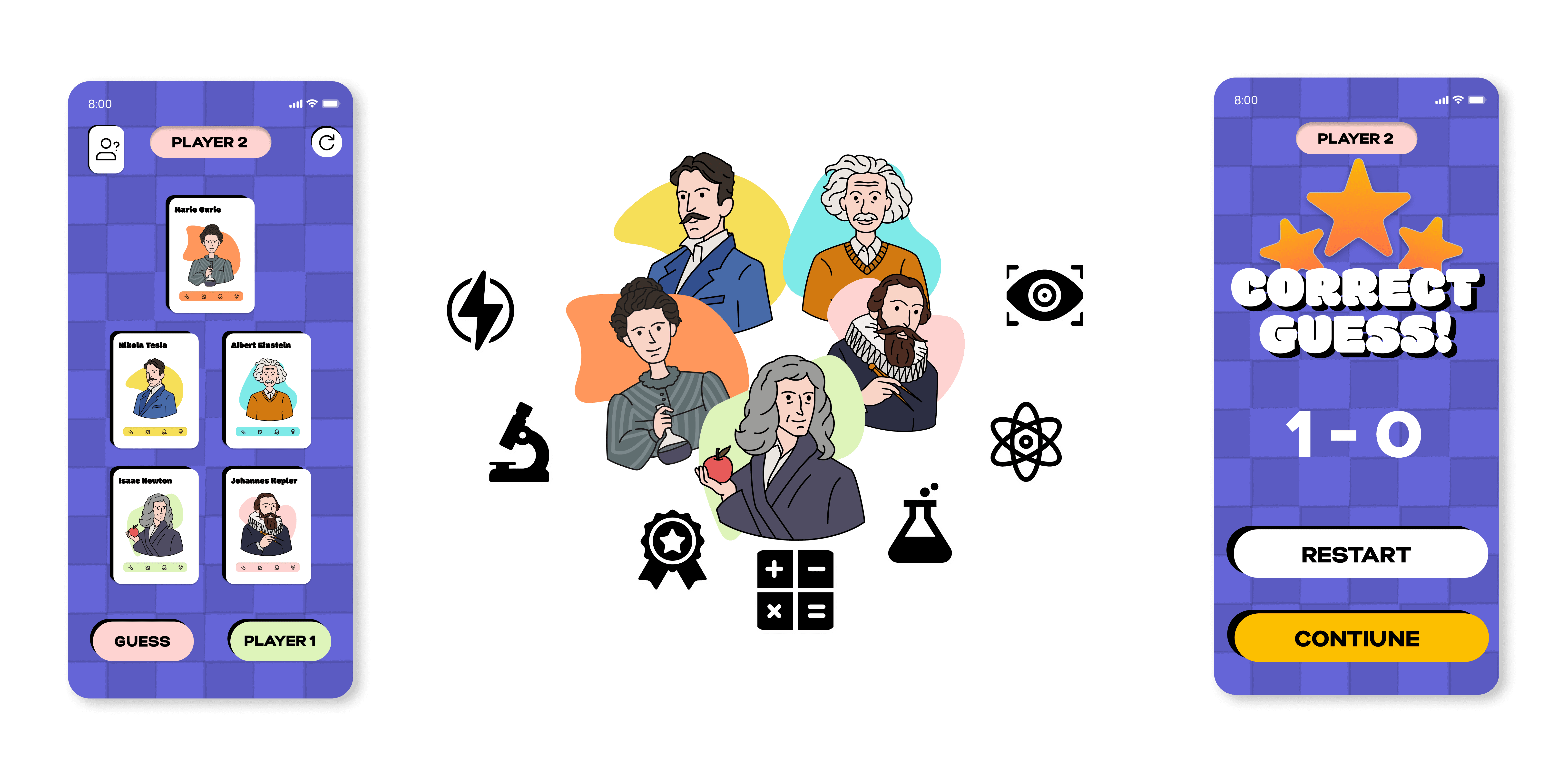
Five scientists were selected for the game, each defined by a set of distinctive characteristics. These attributes are used during gameplay to guide the questioning process and support the elimination of possible options.
my role.
LET'S PLAY A GAME
the game.
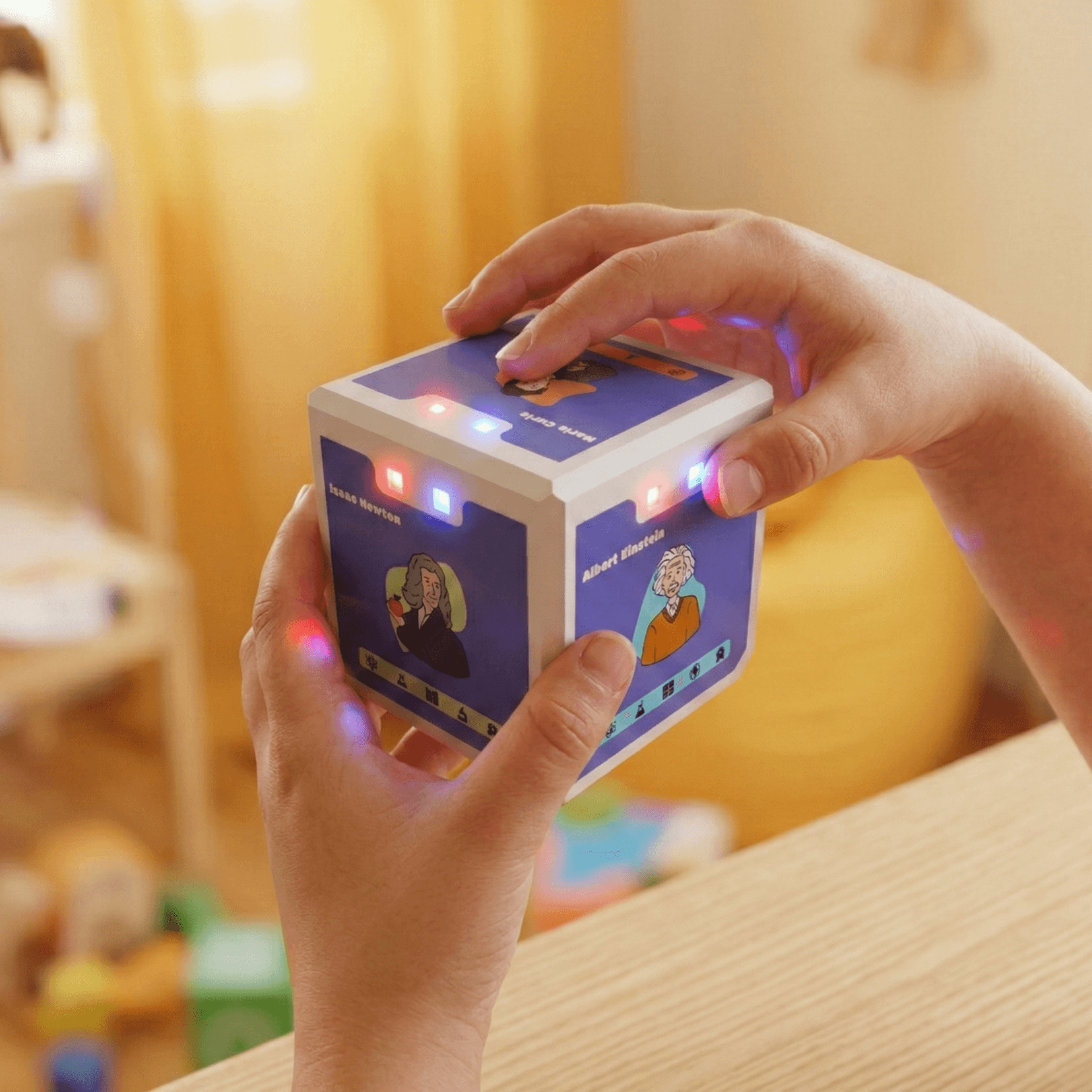
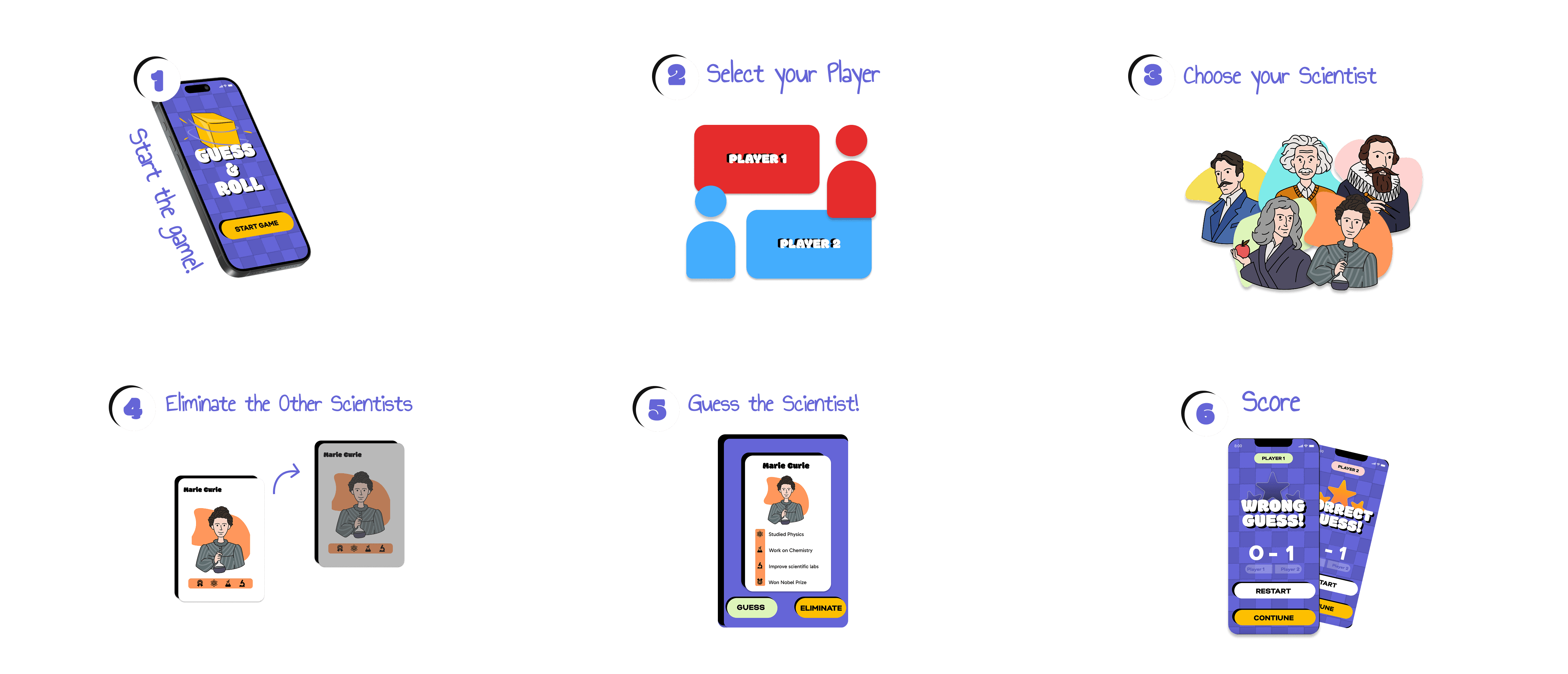
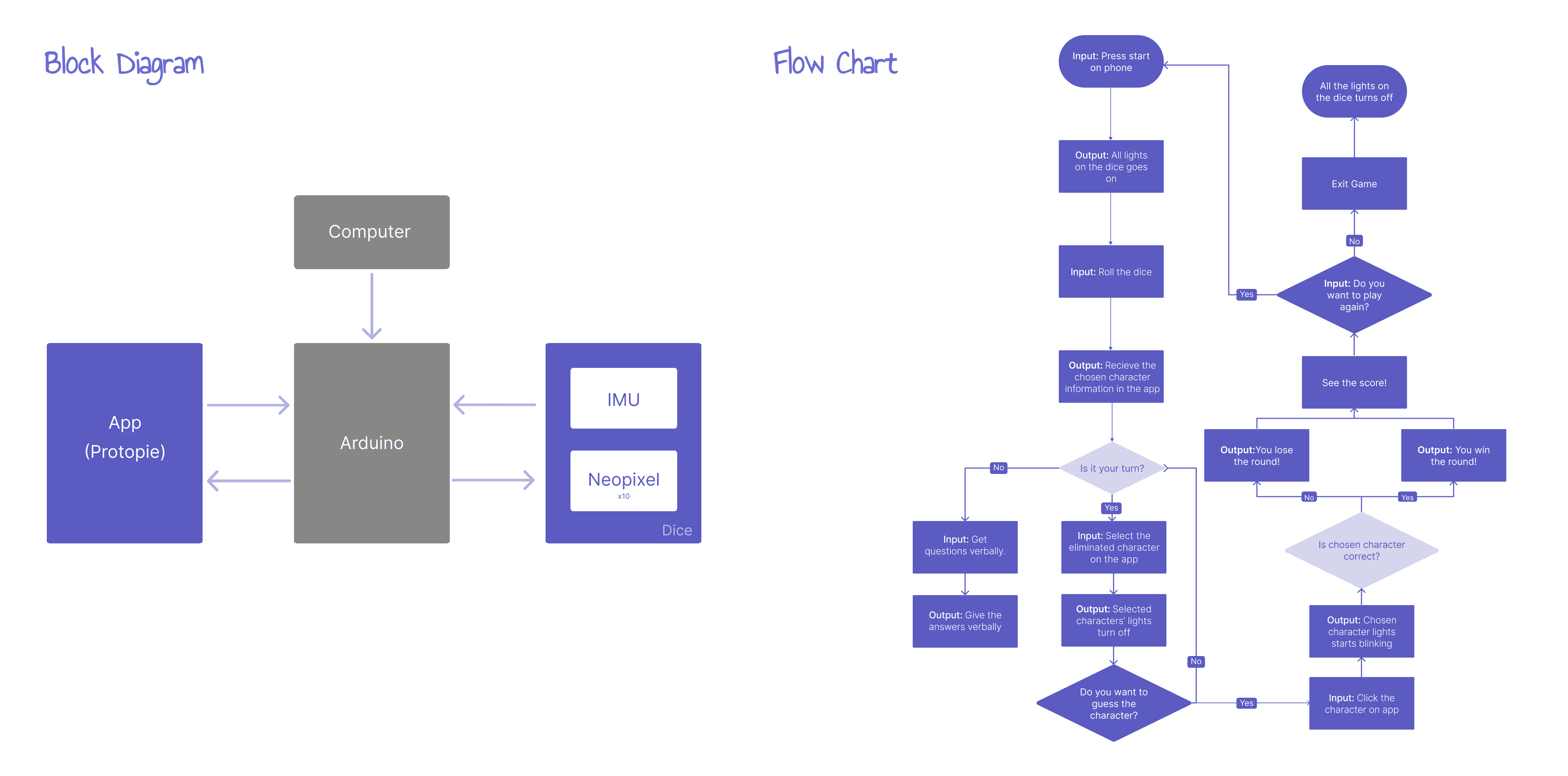
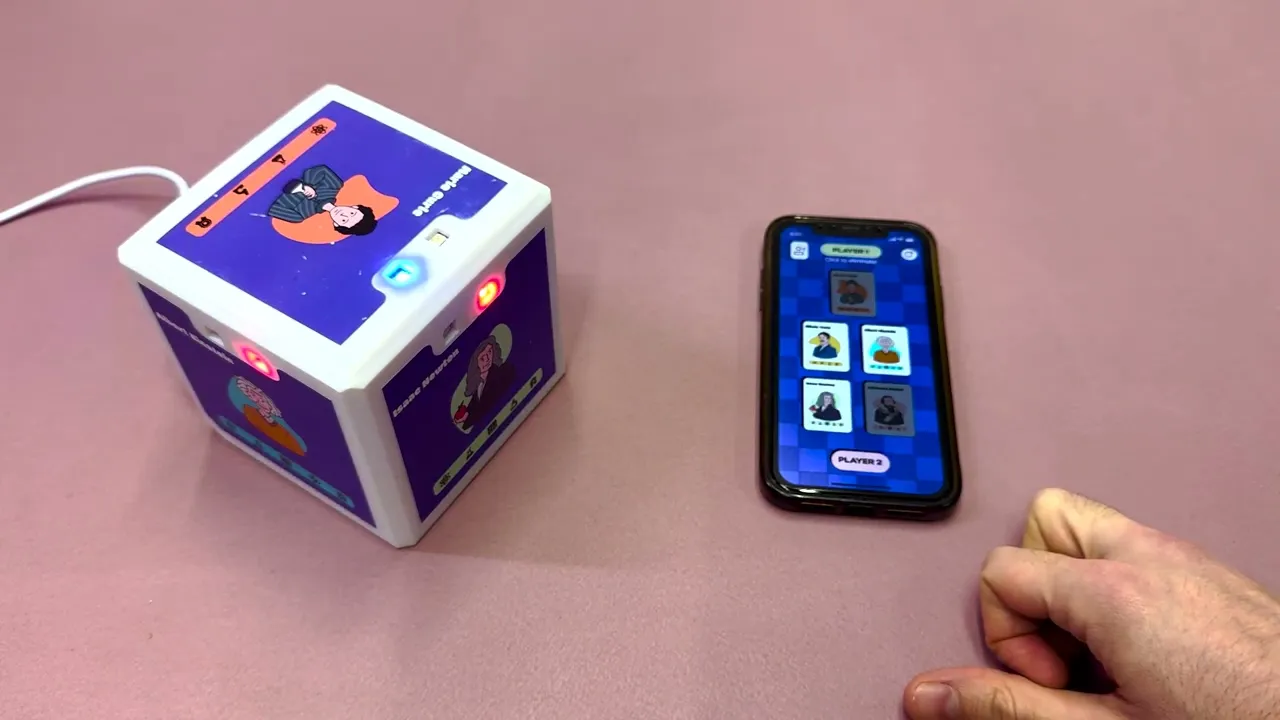
Players roll the dice to randomly select a character and use the application to ask questions that help narrow down the possibilities. Based on the answers, lights on the cube turn off to eliminate options and support the deduction process.
context.
WHO
Designed for children aged 7-14, with family members
WHEN & WHERE
Doesn’t matter thanks to our powerful leds :)
HOW
A phone and the Guess & Roll Dice is more than enough!
what's behind.
the theme.
Five scientists were selected for the game, each defined by a set of distinctive characteristics. These attributes are used during gameplay to guide the questioning process and support the elimination of possible options.
prototype.
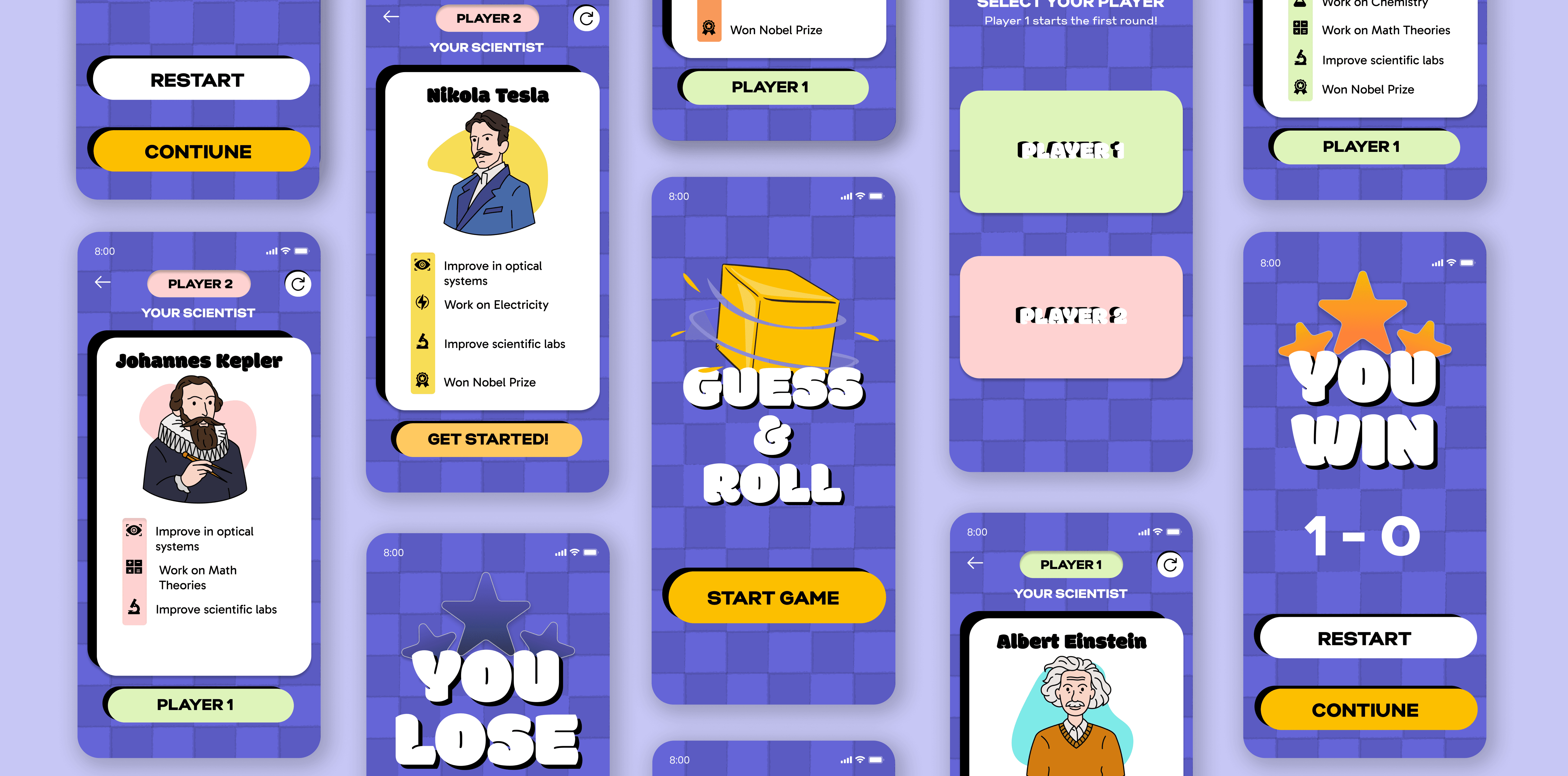
The interface focuses on simplicity and clarity, allowing players to easily navigate through questions and track their progress. Visual elements are used to support decision-making and maintain a smooth, distraction-free gameplay experience.
the dice.
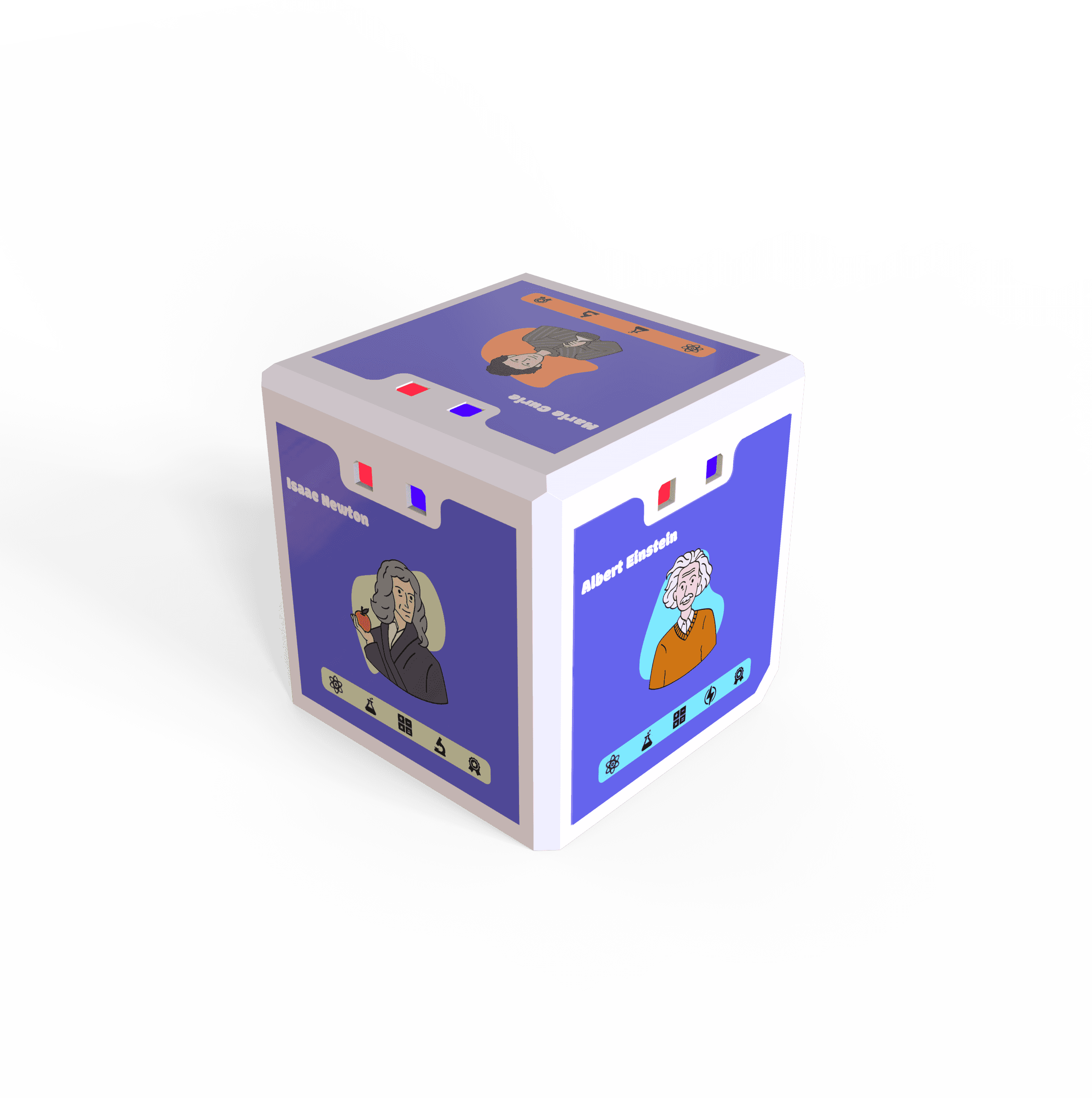
The cube was designed as the core interaction element of the game, combining physical form with embedded digital feedback. Each face represents a different character and their attributes, enabling players to engage through touch, movement, and visual cues.