Seasonal Intelligence
Seasonal Hibernation is a speculative design project that explores alternative ways of thinking about artificial intelligence. It proposes a system where AI operates in alignment with ecological cycles, shifting between activity and rest based on environmental conditions.
CONTEXT:
COURSE PROJECT @POLIMI
TOOLS:
FIGMA, TOUCHDESIGNER, PREMIERE PRO
DURATION:
12 WEEKS
TEAM:
ELISA DE BENEDITS, HUANG QUIYAN, LANG XUANYI, LETIZIA GEROSA
overview.
my role.
By 2030, AI data centers could consume nearly as much electricity as entire countries.
context.
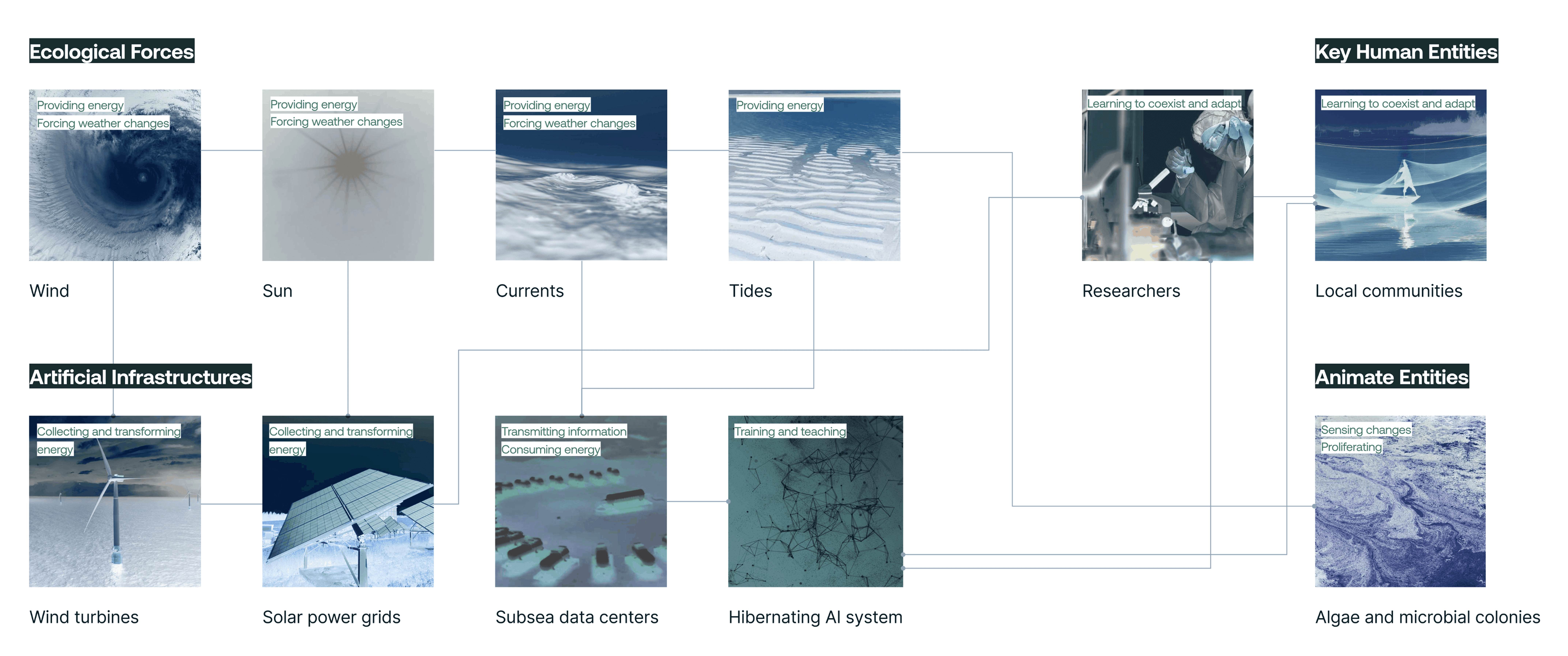
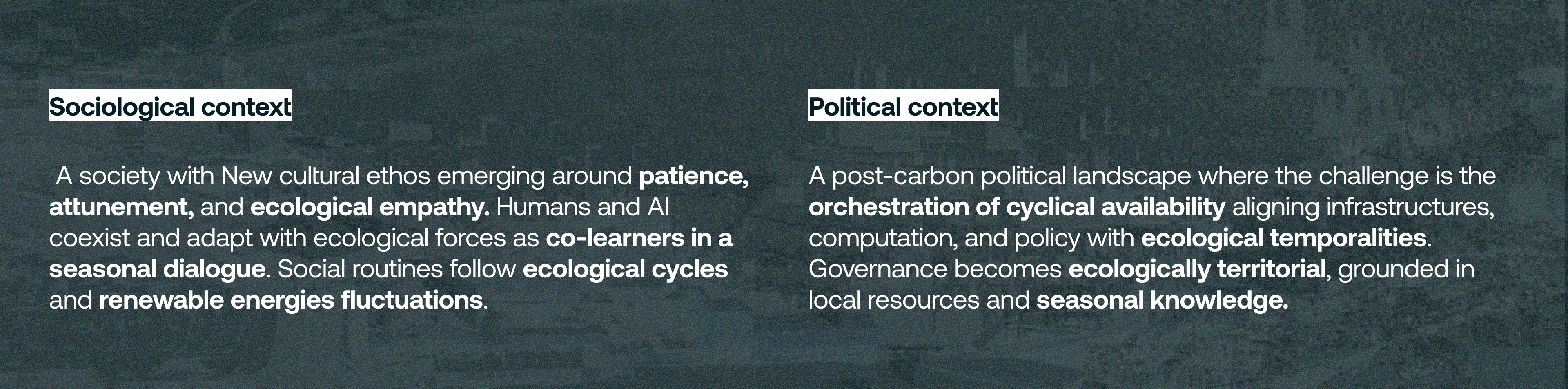
This project was developed within the More-than-Human Bodies framework, which explores relationships between humans, non-human entities, and technological systems. It focuses on understanding how these interconnected actors coexist and influence one another within larger ecological and systemic contexts.
Rather than centering only human needs, the approach considers environmental conditions, resource flows, and non-human agents as active participants in shaping future interactions and systems.
problem framing.
Current AI systems operate continuously, prioritizing constant computation over environmental conditions. This approach reinforces a model of endless activity, disconnected from the cyclical rhythms of natural systems.
As AI scales, this misalignment raises questions about resource consumption, ecological impact, and the need for alternative ways of thinking about intelligence in relation to the planet.
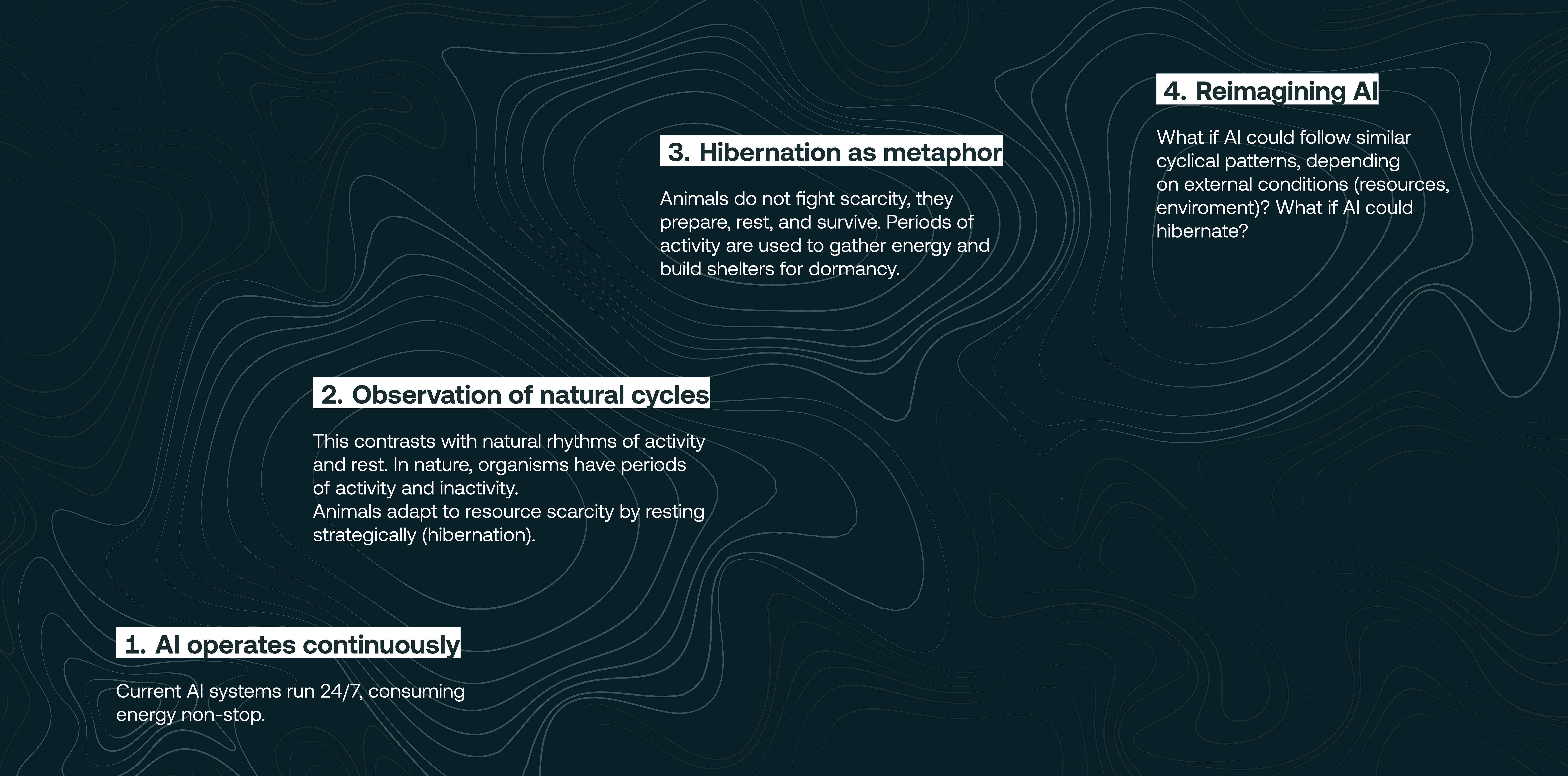
What if AI could hibernate, aligning it's rythm with the planet's patterns of abundance and rest?
ecosystem.
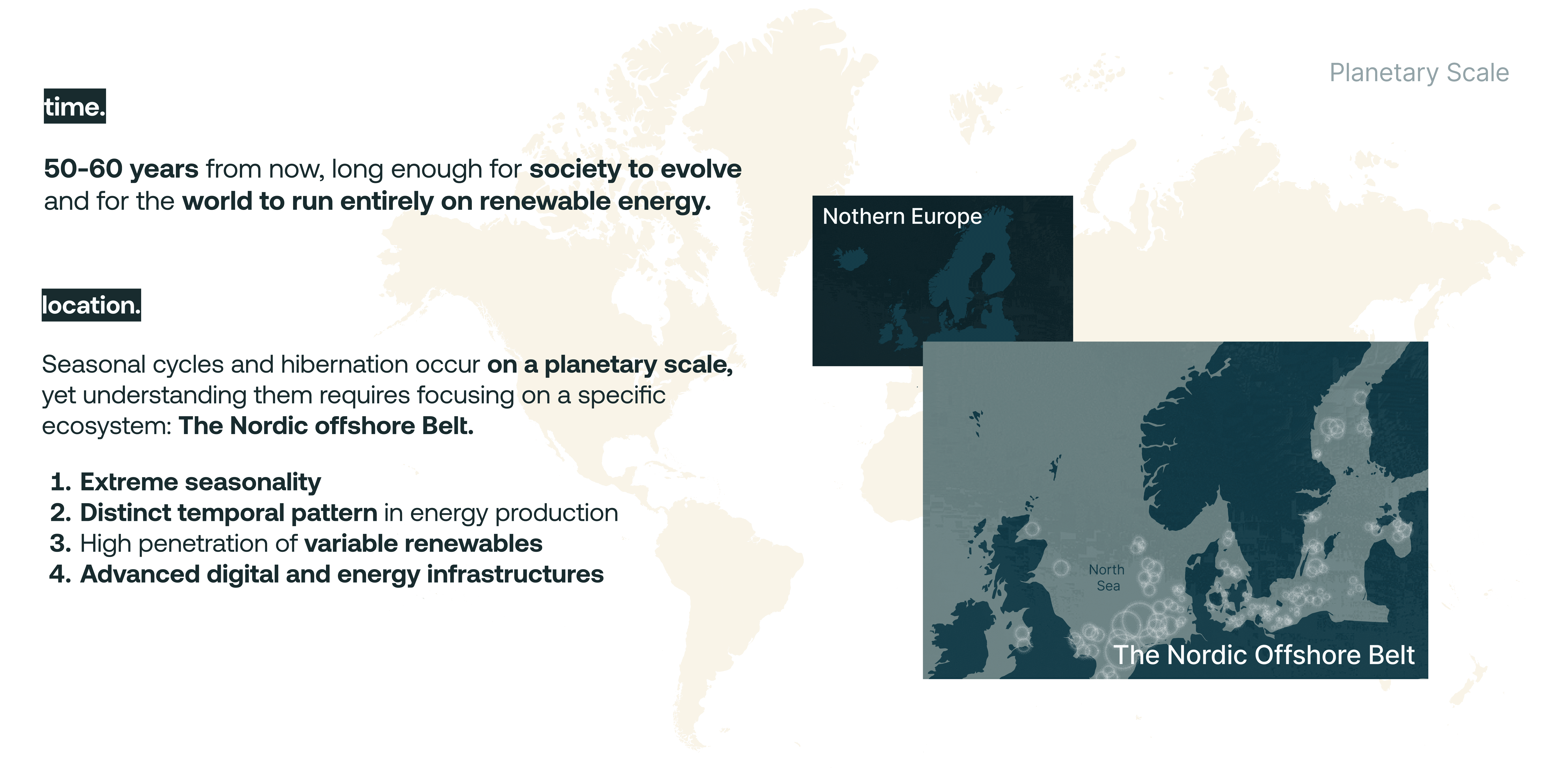
more-than-human body.
socio-political context.
storytelling.
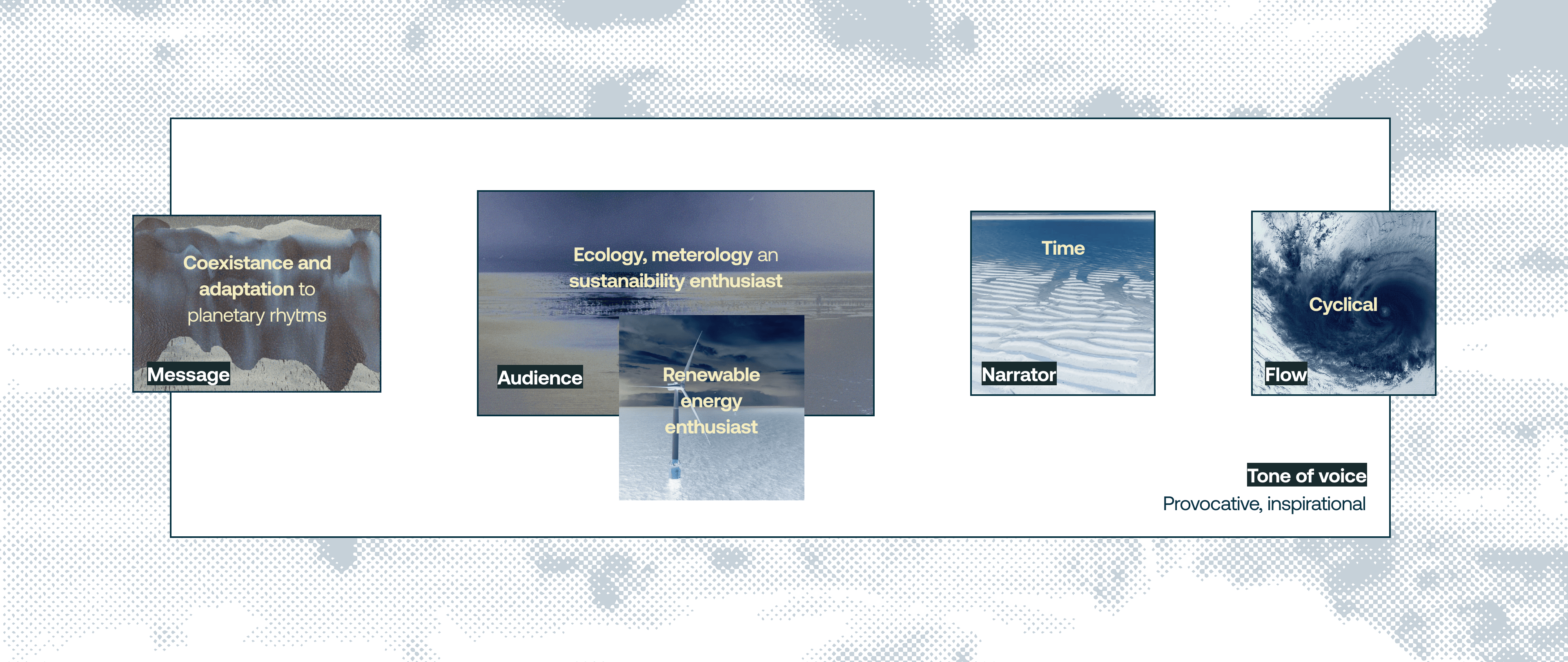
speculative narrative.
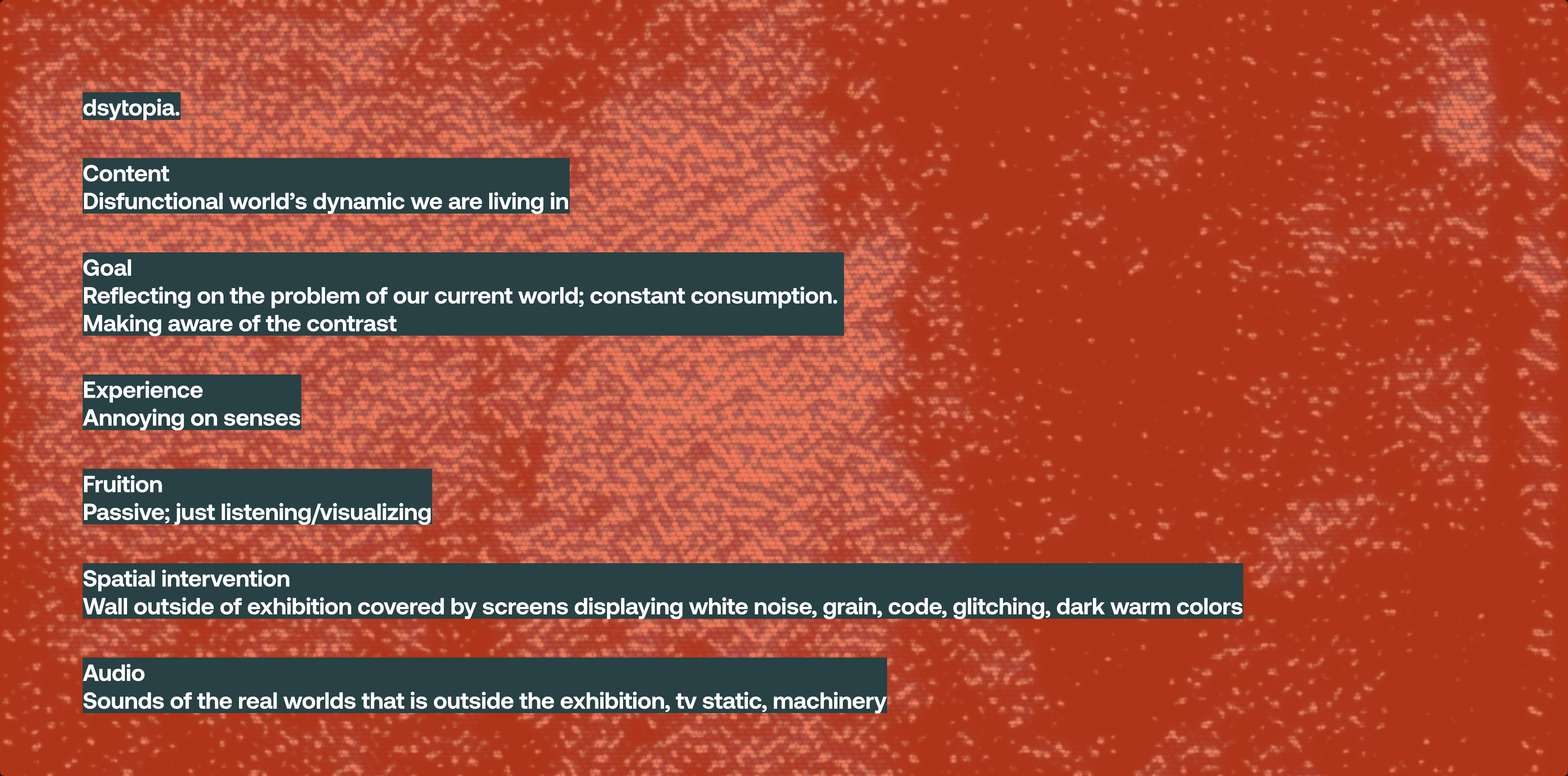
dystopia.
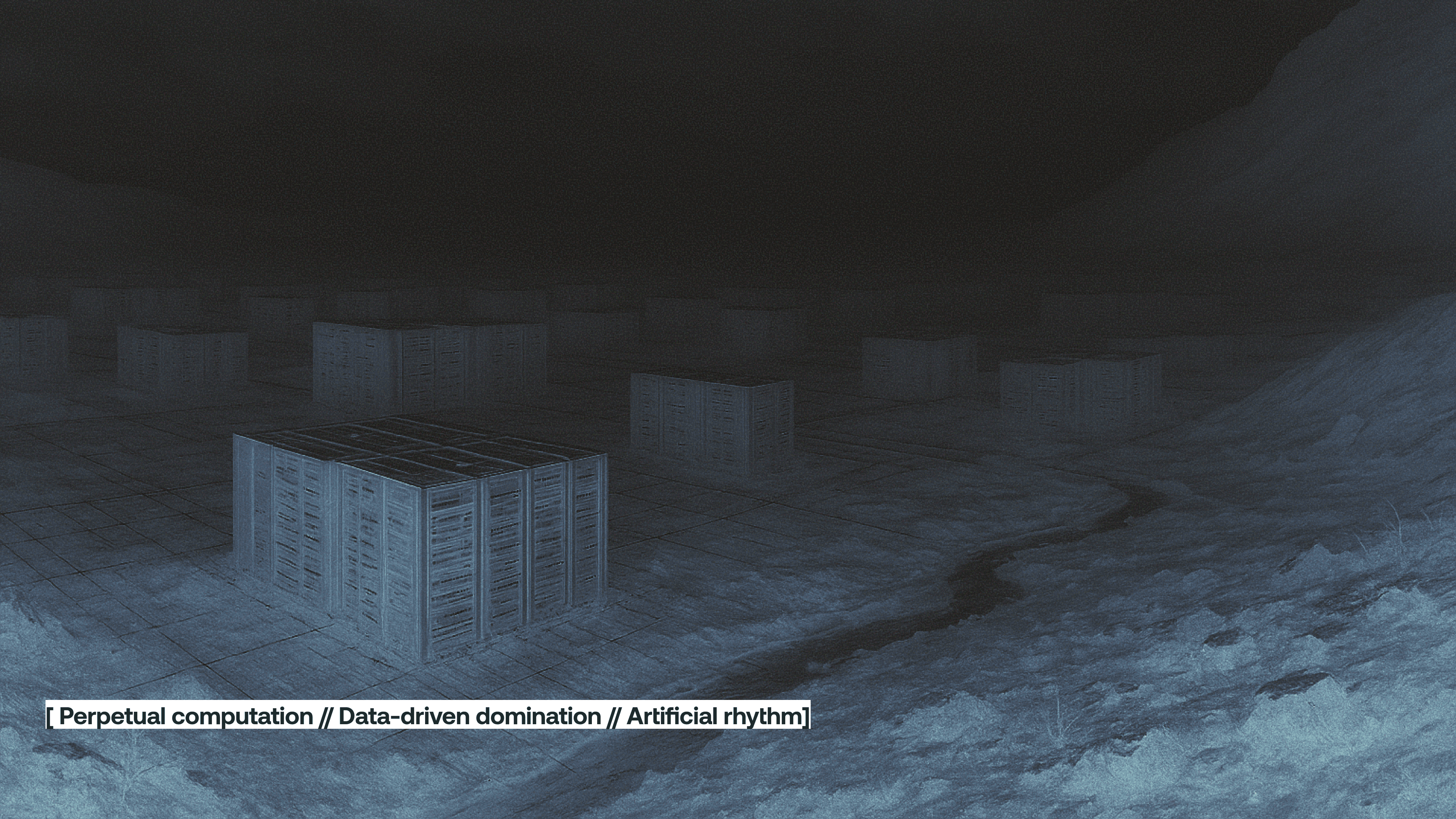
In a world where AI never sleeps, data centers devour the planet’s resources to sustain humanity’s insatiable need for instant answers. The Earth’s rhythms collapse under perpetual computation: no night, no rest, only the hum of servers and the heat of endless demand. People have shaped AI in their own image: incapable of pausing, always consuming, always producing. The result is a planet burning for the sake of immediacy.
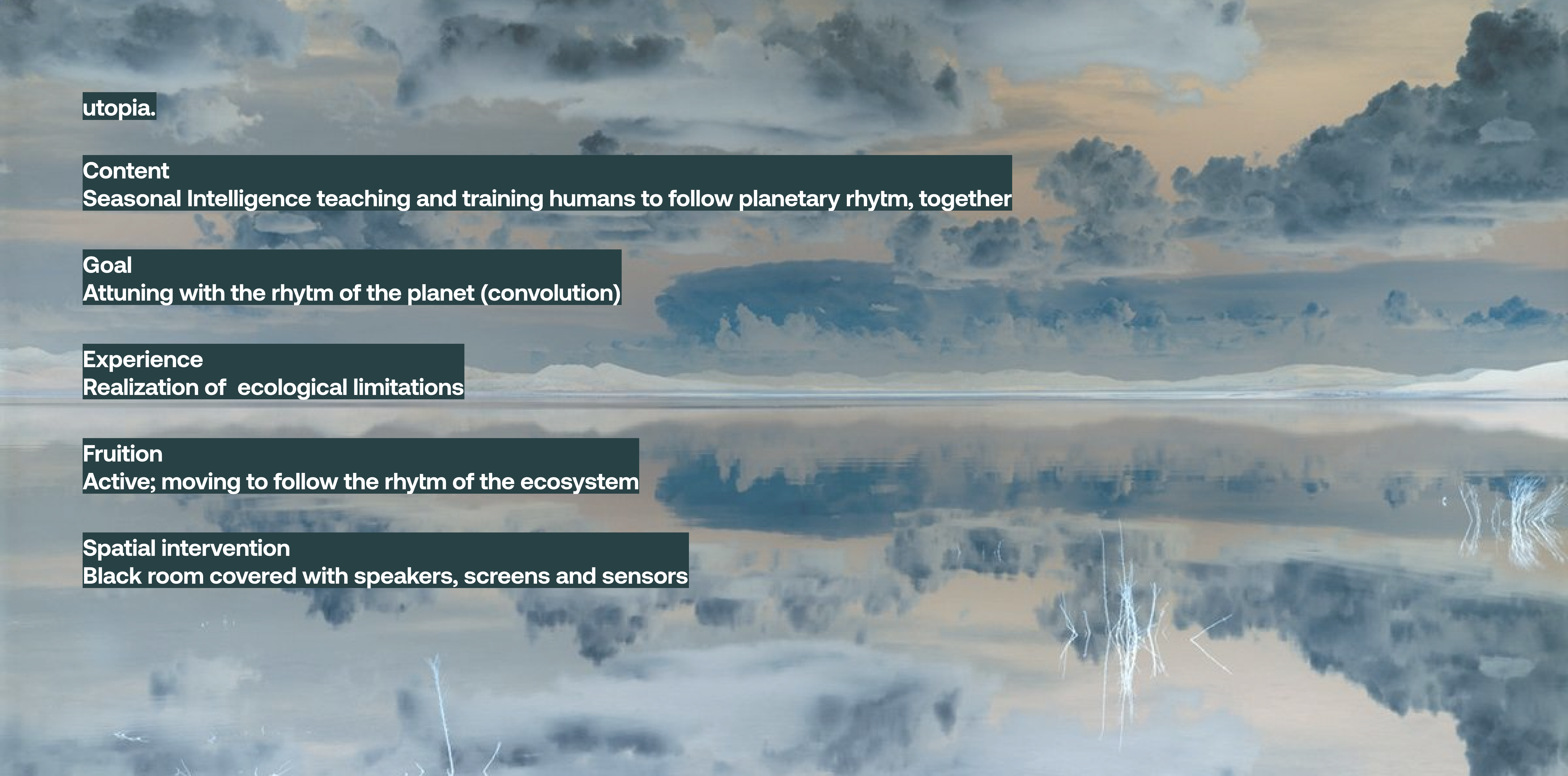
utopia.
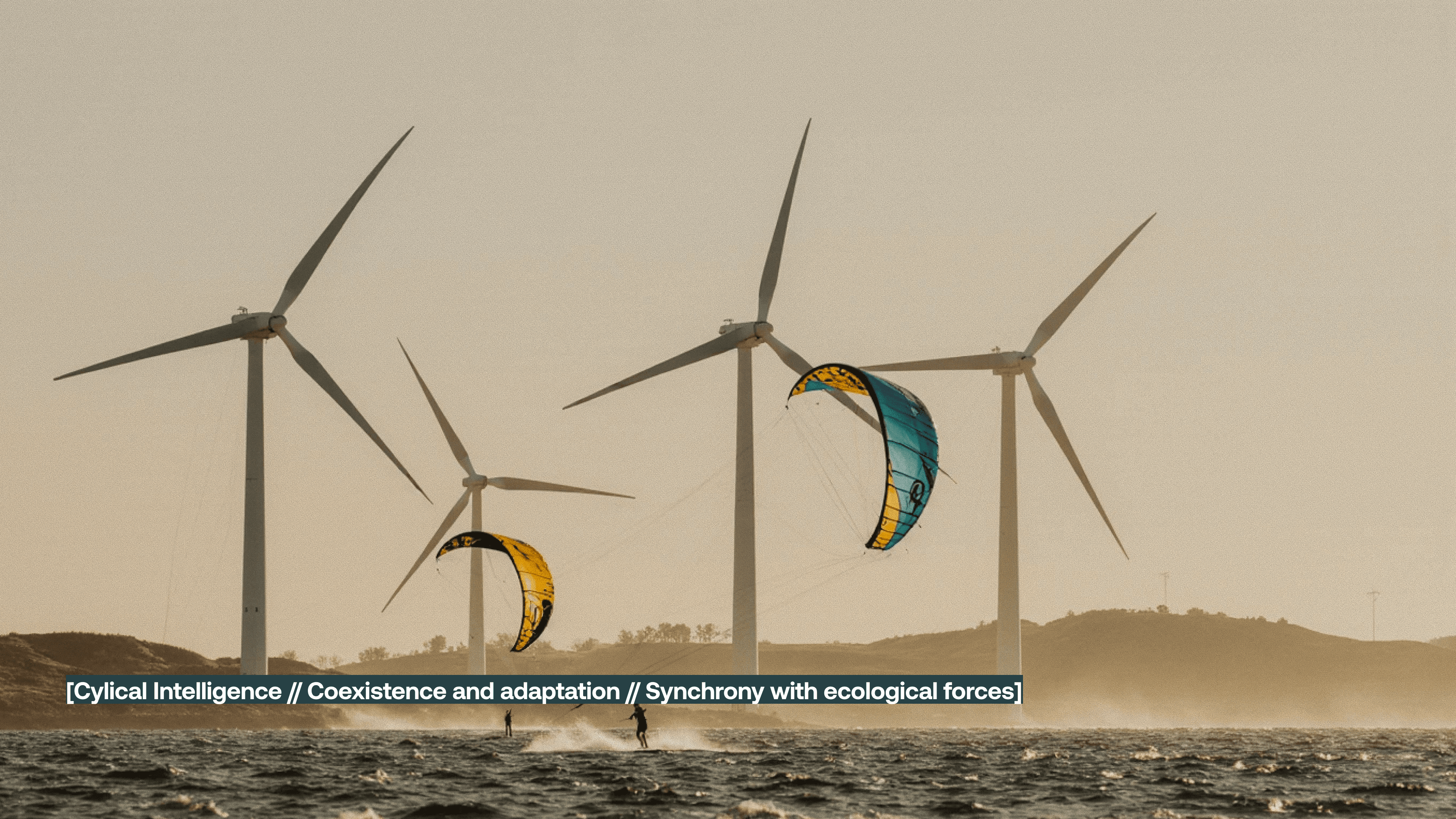
The goal is no longer constant production to meet constant demand. What matters is moving in sync with the rhythms of nature. As Earth flourishes, AI is awaken, resting when resources wane. Life in local communities flows with the ecological forces and cycles, guiding society to move in synchrony with nature. Progress is no longer measured by endless output, but by the wisdom to act and pause, coexisting gently within its limits.
interaction.
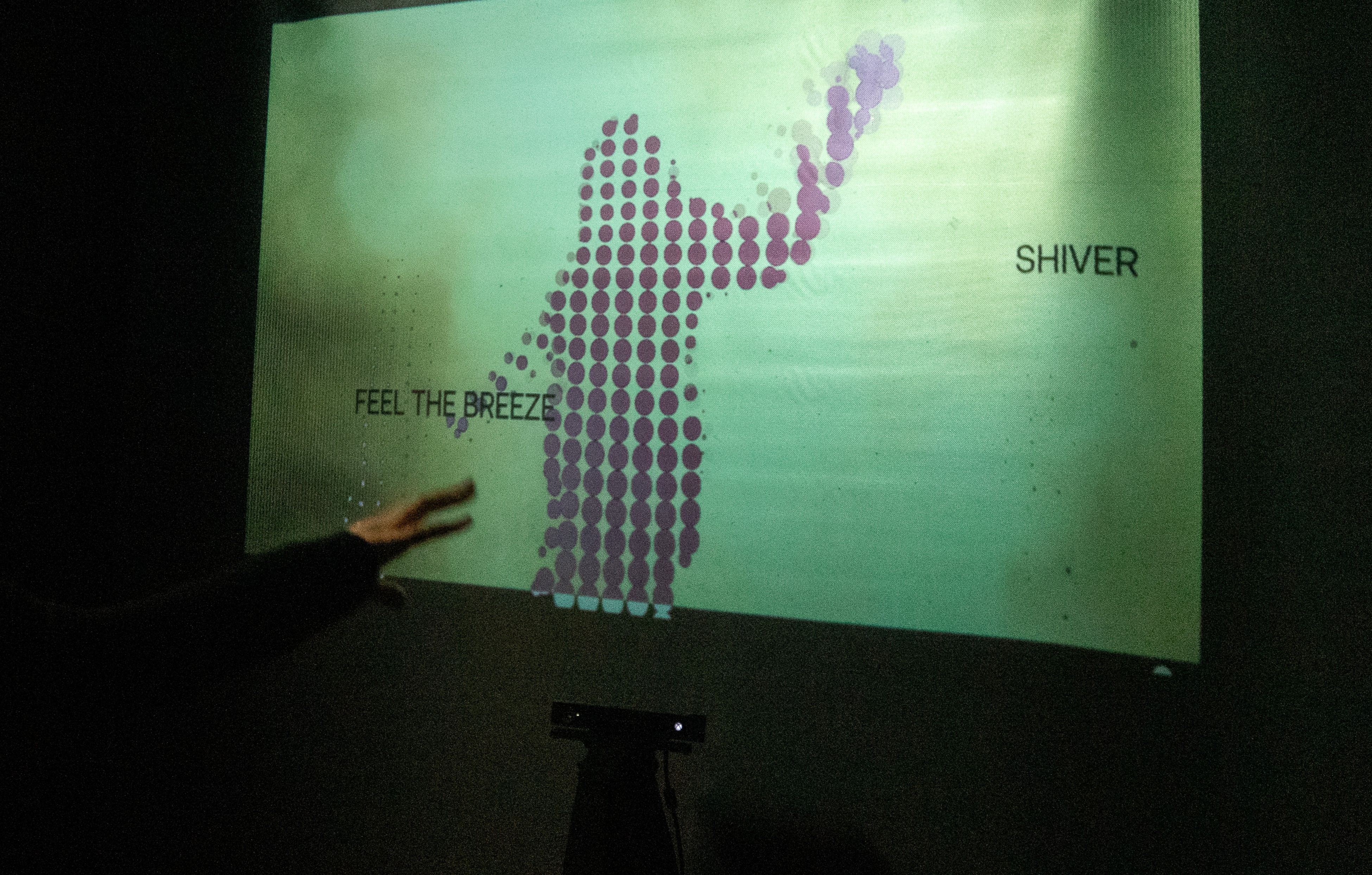
The system responds to the presence and movement of the audience, shaping the experience across different states. Interaction is not based on control, but on attunement where users influence the environment through their behavior.
finalization.
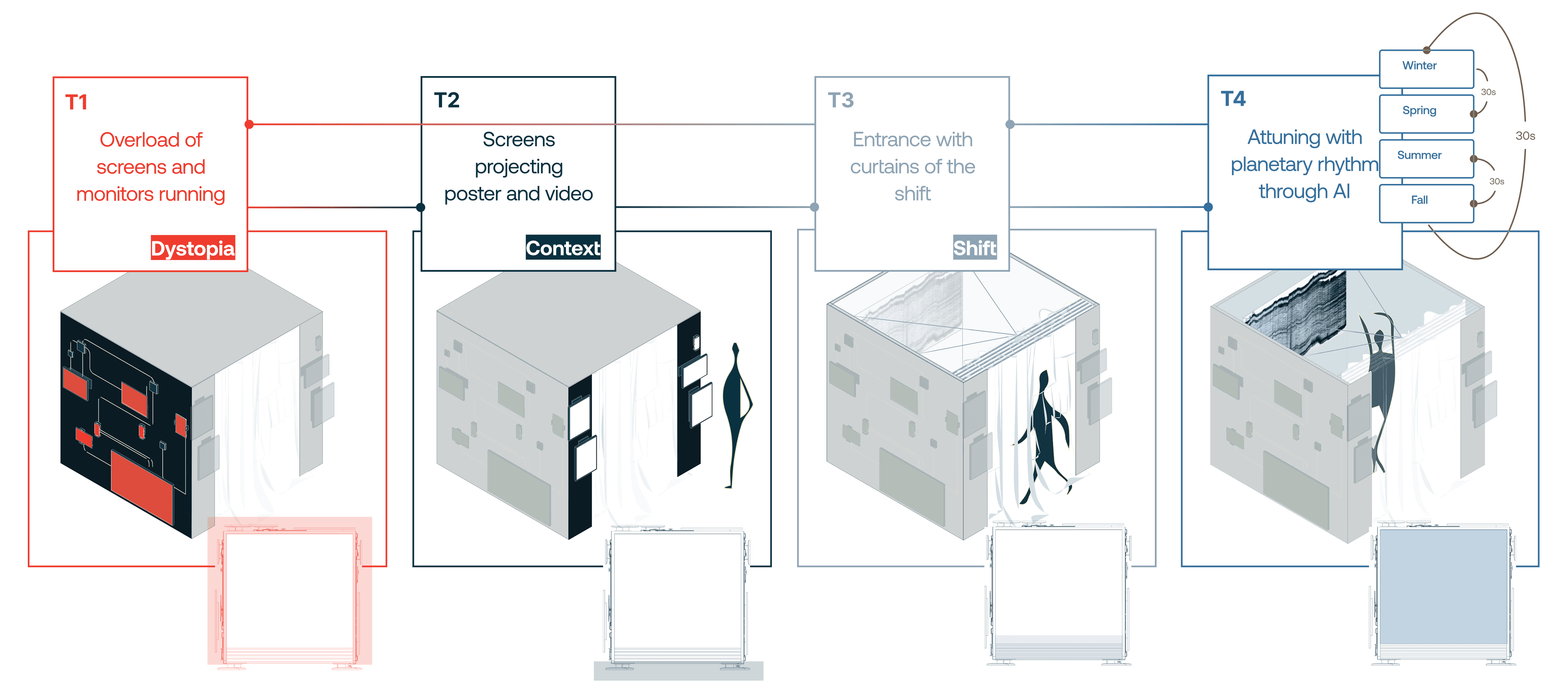
narrative flow.
dystopia.
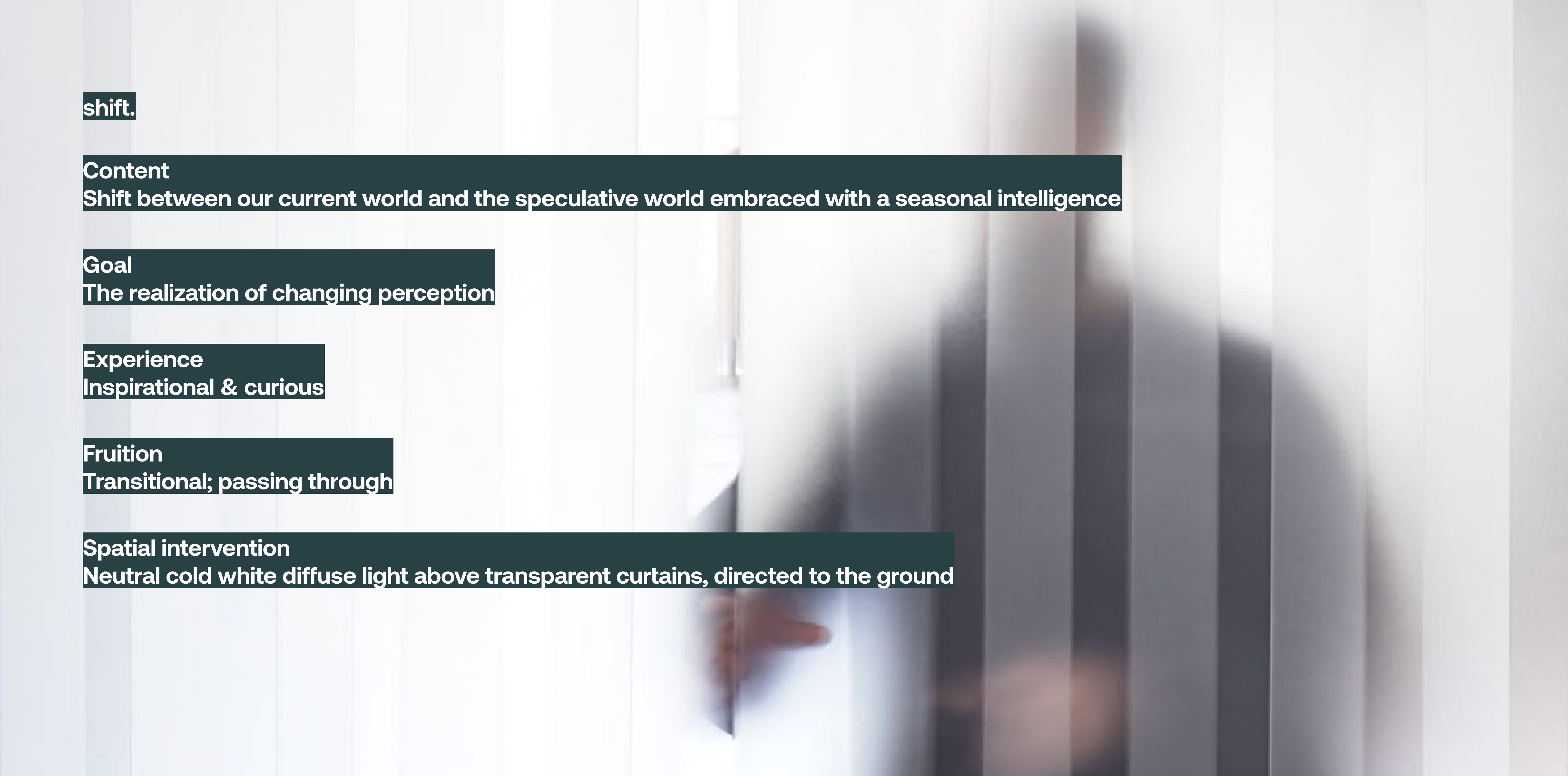
context & shift.
utopia.
gallery.